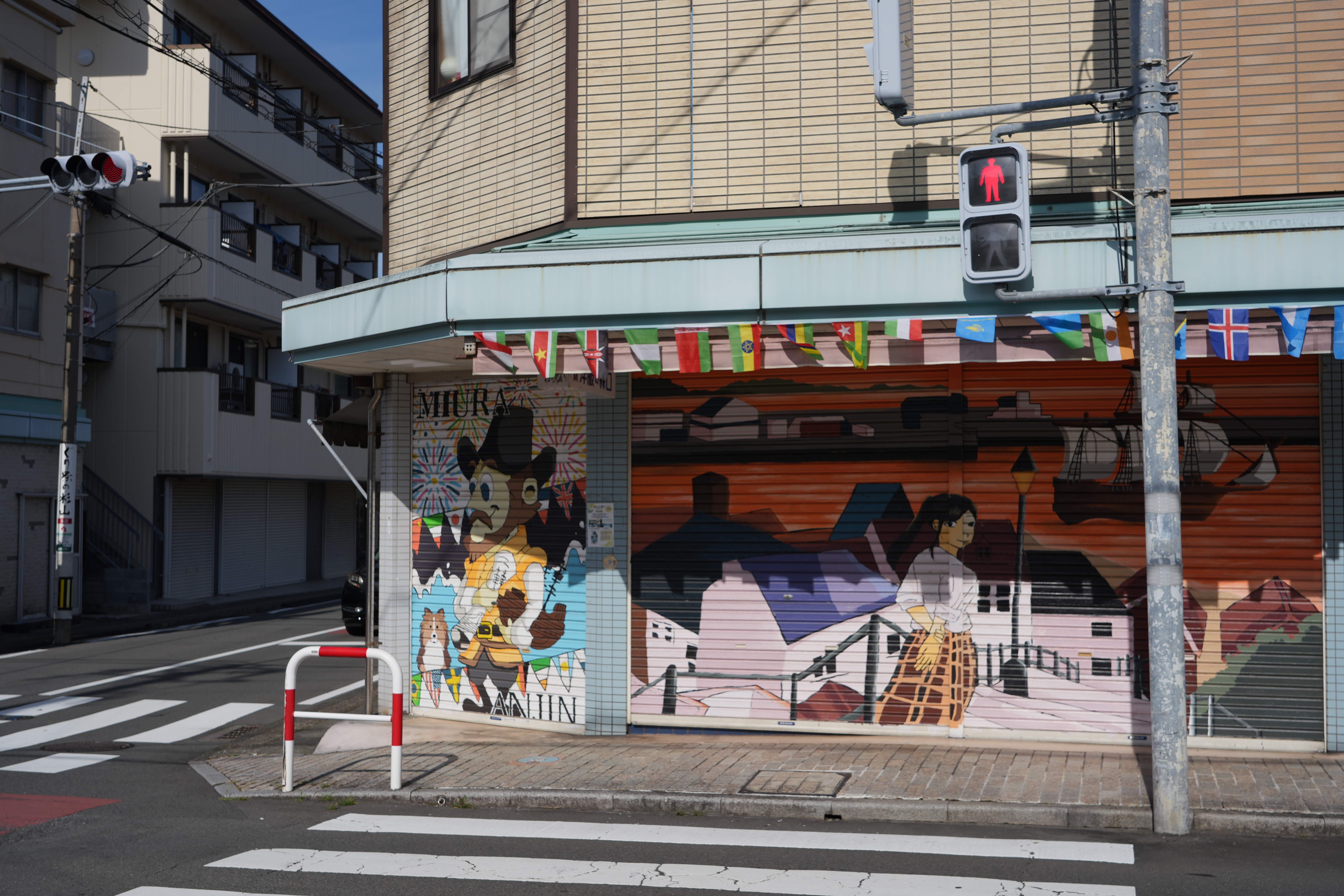
Walk down many regional Japanese shopping streets during off-hours, and you’ll be met with a sea of gray, rolled-down metal storefronts, a common symbol of rural retail decline. But in Ito City, Shizuoka Prefecture, the Anjin-dori Shopping Street takes a brilliant, creative approach. Stretching roughly 350 meters from the Wadayu hot spring neighborhood to just before the Okawabashi Bridge, the street transforms into an open-air gallery. Of course, these artworks are only visible when the shops are closed, turning what is normally a dull landscape of locked metal doors into a vibrant visual experience.
The Izu Peninsula’s Hidden Gem
When travelers head to the Izu Peninsula, they often follow a well-worn path. Most tourists either flock straight to the bustling hot spring resort town of Atami, or they rush past Ito entirely to reach Shuzenji or the hot spring towns deeper in the peninsula.
As a result, Ito frequently gets skipped over. But those who take the time to stop here are rewarded with a much more local, unhurried atmosphere, and hidden cultural gems like Anjin-dori Street that mass tourism tends to miss.
The Cultural Roots: Why “Anjin-dori”?
The street’s name is much more than just a catchy label; it is a direct nod to Ito’s unique place in global and Japanese history.
Anjin honors William Adams (known in Japanese as Miura Anjin), an English navigator who arrived in Japan in the early 17th century and became a trusted advisor to the Shogun Tokugawa Ieyasu. Long before modern diplomacy, Adams made Ito his home base, overseeing the construction of Japan’s very first Western-style sailing ships right on these shores.
Walking down Anjin-dori Street today feels like stepping across centuries. The shutter art acts as a modern bridge, connecting Ito’s rich maritime heritage and its ties to the world with the everyday creativity of its modern residents.

The Travel Experience: A 350-Meter Art Stroll
For travelers looking to step off the beaten path, this stretch offers a wonderful, low-impact walking experience.
- The Route: The art zone covers about 350 meters, running seamlessly from the Wadayu area (steeped in Ito’s hot spring history) down toward the approach of Okawabashi Bridge.
- The Visuals: As you walk past closed storefronts, the metal security panels reveal a colorful mix of whimsical designs, historical tableaus, and local motifs. It turns an ordinary walk into a scavenger hunt for local artistry.
- The Timing: Because the artwork lives on shop shutters, you won’t see them during regular shopping hours. They reveal themselves during early mornings, quiet evenings, or on days when local businesses are closed.


Practical Tips for Your Visit
- Getting There & Exploring: Anjin-dori Shopping Street is an easy, walkable distance right from Ito Station (served by the JR Ito Line and Izu Kyuko Line). Because the street is completely flat and pedestrian-friendly, it’s a breeze to explore on foot.
- Best Time to Visit: To view the shutters fully unobstructed, aim for early mornings, evenings, or Sundays when the shops are closed. Remember, these artworks completely disappear behind working storefronts during business hours!
- Take a Sweet Break: If you get tired or need a break while exploring, make sure to stop by Wakaba, a legendary, long-standing local ice cream and soft-serve shop located nearby. It’s a beloved local institution that has been treating visitors and locals alike for decades, making it the perfect reward before or after your art stroll.
- Make a Day of It: Slow down and give Ito the time it deserves, rather than rushing past to Atami or Shuzenji. Pair your art walk with a treat from Wakaba, a soak in a local hot spring, or a stroll along the nearby Matsukawa River.