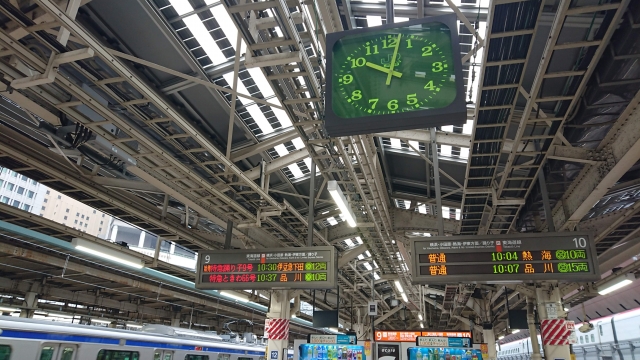
Picture this: You are standing on a Tokyo train platform, casually sipping your coffee. The digital board says your train arrives at 8:02. At 8:03, the train pulls in. As you step through the doors, the conductor’s voice comes over the loudspeaker, bowing metaphorically to the passengers: “We sincerely apologize for the one-minute delay.”
If you are from the US, Europe, or pretty much anywhere else outside of Japan, your reaction is probably: Wait… they are apologizing for ONE MINUTE? Back home, if a train shows up within the hour, we throw a party!
So, why does Japan treat a 60-second delay like a national emergency? Let’s dive into the fascinating cocktail of engineering, culture, and pure survival instinct that makes Japanese railways tick with such relentless precision that they make standard clockwork look casual.
The Hidden Plot Twist of Traveling by Train in Japan
So, you’ve planned your dream trip to Japan. You’ve got your Welcome Suica loaded, your itinerary mapped out to the exact minute, and your sleek rolling suitcase ready to conquer the rails.
Then reality hits the station platform.
While Japan’s legendary punctuality is a traveler’s best friend, it comes with a few unwritten travel rules and hidden labyrinthine plot twists that catch tourists off guard. Let’s look at how train travel in Japan actually feels when you’re on the move with luggage.
Rule #1: “No Rush” Will Cost You the Train
In many parts of the world, if a train timetable says it arrives at 10:15, you saunter up to the platform at 10:14, knowing full well the train will likely drift in a few minutes late anyway.
Do not try this in Japan.
Because trains here operate with hyper-accurate precision, “fashionably late” doesn’t exist. If you stroll onto the platform at 10:16 for a 10:15 train, you will literally watch the tail lights vanish into the tunnel. The train doors close with absolute finality, leaving you standing alone wondering how an entire transit system moved faster than your brain.
Rule #2: The Mega-Station Maze (And Your Luggage)
In other countries, cross-platform transfers or quick hops between lines might mean just stepping across the aisle or walking a few feet.
In Japan’s massive city hubs (like Tokyo, Shinjuku, or Osaka Station), things work a bit differently. Because each line or platform often has its own dedicated tracks and independent structure, transferring trains can turn into an unexpected obstacle course:
- The Staircase Workout: Changing trains often means heading down a flight of stairs, weaving through bustling underground concourses, and heading back up another flight.
- The Elevator Quest: If you are rolling a heavy suitcase, pushing a stroller, or traveling with a wheelchair, escalators and stairs are out. You have to hunt down the elevator.
- The Time Sink: Japanese station elevators can be small and notoriously busy. Waiting for your turn with bulky luggage can easily add 10 to 15 minutes to your transfer time. What looked like a “5-minute connection” on your navigation app suddenly turns into a heart-pounding sprint against the clock.
Pro-Tip for Travelers
When navigating Japanese stations, always pad your transit time with an extra 10–15 minutes just to handle the station layout, find the elevator, and locate your specific platform. Embrace the precision, pack light if you can, and always respect the clock!
The Domino Effect: A Dance of Seconds
In major Japanese cities, the railway system isn’t just a transportation network; it is a hyper-complex, interlocking web of clockwork precision that operates closer to a symphony than a standard transit system.
The Squeeze: Trains run on an ultra-dense schedule managed down to the exact second.
The Domino Fall: If Train A is delayed by just 60 seconds, it throws off the precise spacing needed for Train B, C, and D. Before you know it, the entire line is experiencing a gridlock symphony of gridiron proportions.
The Transfer Web: Japanese timetables are coordinated down to the minute with connecting trains and buses. A single minute’s slip means missing your golden window to catch that connecting local train, and suddenly, your whole morning is rearranged.
Meanwhile, in the Rest of the World…
To understand how wild Japan’s standards are, look at how other countries define a “delay”:
| Country / Region | When Does It Count as “Late”? | The Vibe |
| Japan | 1 minute+ | “We have failed as a society. Please accept our apologies.” |
| Switzerland | 3 minutes+ | Europe’s gold standard for punctuality, but still giving a bit of breathing room. |
| Germany | 6 minutes+ | Long-distance trains are dealing with aging infrastructure headaches. |
| UK | 5 to 10 minutes+ | Varies by line; a standard part of the daily commute. |
| US (Amtrak) | 10 to 30 minutes+ | Vast distances mean timetables are more like gentle suggestions. |
While international travelers shrug off a 5-minute delay as an “error margin,” in Japan, a timetable is treated like an absolute legal contract between the railway company and the passenger.
Dedicated Tracks vs. The Traffic Jam
It’s not just cultural willpower; Japan has massive infrastructure backing it up.
In places like Europe and America, high-speed passenger trains often share the exact same tracks with local commuter trains and massive, lumbering freight cargo trains. If a cargo train sneezes, every passenger train behind it gets trapped in a massive traffic jam.
In Japan, especially on the Shinkansen (bullet train) network, passenger lines have their own exclusive tracks. There are no heavy freight trains blocking the highway of the rails, allowing trains to scream through the countryside at 300 km/h without breaking a sweat.
Respect, Social Trust, and the “Delay Certificate”
At the heart of it all is a cultural commitment to time as a form of mutual respect.
Because millions of people rely on trains for work and school, running on time is seen as a basic courtesy to everyone else’s schedule. If you waste someone’s time, you are stepping on their day.
Plus, there’s a very practical kicker: the Late Certificate (Chien Shomeisho). If you stroll into your office or school 5 minutes late because of a train, your boss won’t believe you just overslept, unless you hand them an official slip from the station master proving the train messed up. Because companies demand proof, railway companies are forced to record and confess to every single minute of trouble.
Mind the Gap (and the clock!)
At the end of the day, Japan’s railway system is a mesmerizing blend of high-speed engineering, deep-rooted social courtesy, and a relentless dedication to the clock. While navigating massive station mazes with a heavy suitcase or sprinting to catch a train that refuses to wait can test your patience, it’s all part of the unique adventure. Just remember: in Japan, time waits for no one, especially not a late traveler! So pack light, keep an eye on the second hand, and enjoy the smoothest ride of your life.